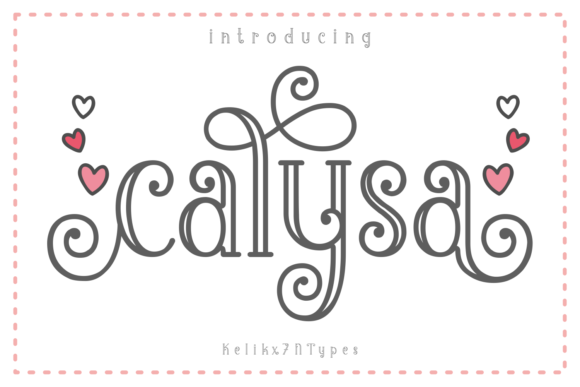
Calysa: A Playful Display Font for Creative Branding
I was working on a brand identity project for a small handmade soap shop when I stumbled upon Calysa. The brief called for something warm, approachable, and just a little whimsical to reflect the artisanal nature of the product. I had tested several fonts, but none quite captured that balance of playfulness and professionalism until I tried Calysa. It felt like the perfect match—unique, expressive, and full of character.
A Font That Speaks to Creativity
Calysa is an incredibly unique and playful display font. Its curves are soft yet confident, and its letterforms have a certain charm that feels handcrafted rather than machine-made. It’s not overly ornate, but it carries enough personality to stand out in any design. When I first applied it to the logo concept, it immediately brought a sense of warmth and approachability to the brand. It wasn’t just about looking good—it was about feeling right.
The visual characteristics of Calysa are what make it so versatile. The uppercase letters have a slight slant, giving them a dynamic energy, while the lowercase letters maintain a balanced flow. This combination makes it ideal for short phrases, headlines, or accents in a larger type system. It doesn't feel too casual for a professional setting, nor does it become too formal for a creative project.
Testing Calysa in Real Design Scenarios
I used Calysa across multiple elements of the branding project: the logo, packaging mockups, business cards, and even the website header. In each case, it performed beautifully. On the packaging label, it added a touch of elegance without overshadowing the product name. On the business card, it gave the design a friendly yet polished look. And on the website hero section, it commanded attention without being overwhelming.
When placed next to other fonts, Calysa stood out as a strong display option. Pairing it with a clean sans serif font like Helvetica Neue for body text created a nice contrast. The pairing worked especially well in social media graphics where the headline needed to pop against a colorful background. It also looked great on Instagram posts and Pinterest pins, where visual appeal plays a big role in engagement.
However, I did notice that Calysa isn't the best choice for long blocks of text. At smaller sizes, some of the more intricate details in the letterforms can become less legible. For this reason, I recommend using it as a display or headline font rather than for extended body copy. It shines most when used sparingly and strategically.
Where Calysa Fits Best in Your Design Toolkit
Calysa is best used as a display font, headline font, or accent font. It works particularly well in projects that require a touch of creativity and personality. Think wedding invitations, thank you cards, greeting cards, logos, and brand identities that lean into a more artistic or boutique aesthetic.
It's not suitable for all contexts. If your project requires high readability at small sizes or involves large amounts of body text, a more standard sans serif or serif font would be a better fit. Similarly, if the brand needs to feel ultra-professional or corporate, Calysa might not align with that tone. But for those looking to inject a bit of flair and fun into their designs, it’s hard to beat.
In terms of practical use, I suggest testing Calysa in different scenarios before committing to it in final client work. Try it on a sample logo, a packaging mockup, and a few social media layouts. See how it interacts with other fonts, colors, and backgrounds. This will help ensure it fits seamlessly into your overall design system.
Font Pairing and Practical Considerations
For font pairing, I found that Calysa pairs well with both serif and sans serif fonts. A classic serif like Georgia or Garamond adds a timeless quality, while a modern sans serif like Montserrat or Lato provides a clean contrast. When designing for web use, I recommend checking the availability of webfont versions to ensure seamless performance across devices.
Also, always check the commercial font licensing before using Calysa in client work, brand identity, packaging, templates, merchandise, websites, digital products, or print-on-demand products. Licensing agreements vary, and it’s important to understand the terms of use to avoid any legal issues down the line.
Overall, Calysa is a font that brings a fresh perspective to branding projects. It has a unique voice that can elevate the visual storytelling of any design. Whether you're working on a boutique identity, a café refresh, or a creative studio brand, Calysa offers a playful yet professional solution that feels both modern and timeless.